
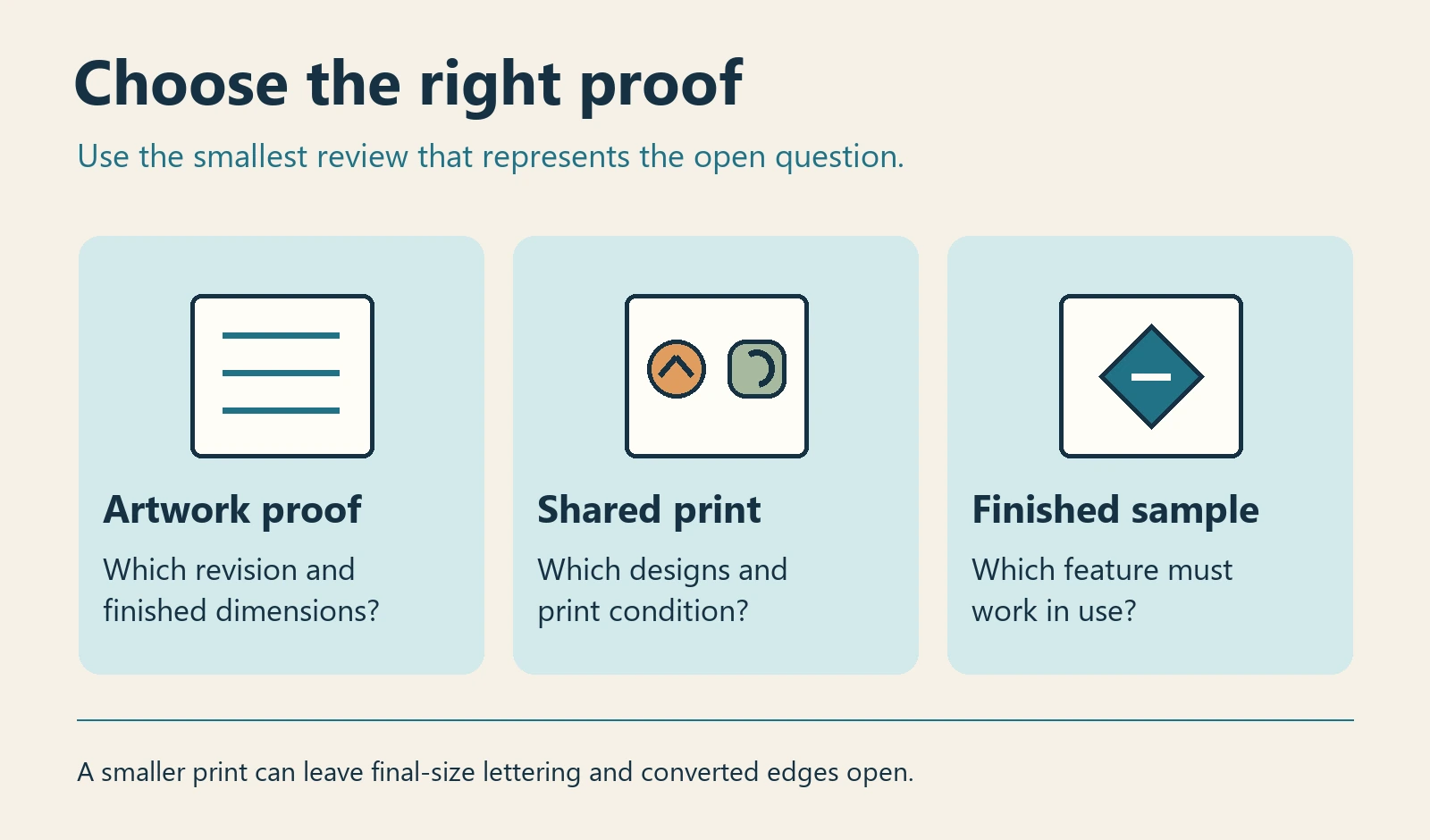
Request a proof plan by design and revision when several sticker artworks will be produced together. Ask for an identified visual review of every released file. A shared physical print can help compare several designs under one agreed print condition, while a separate finished sample can answer questions that depend on a particular sticker's material, size or cut.
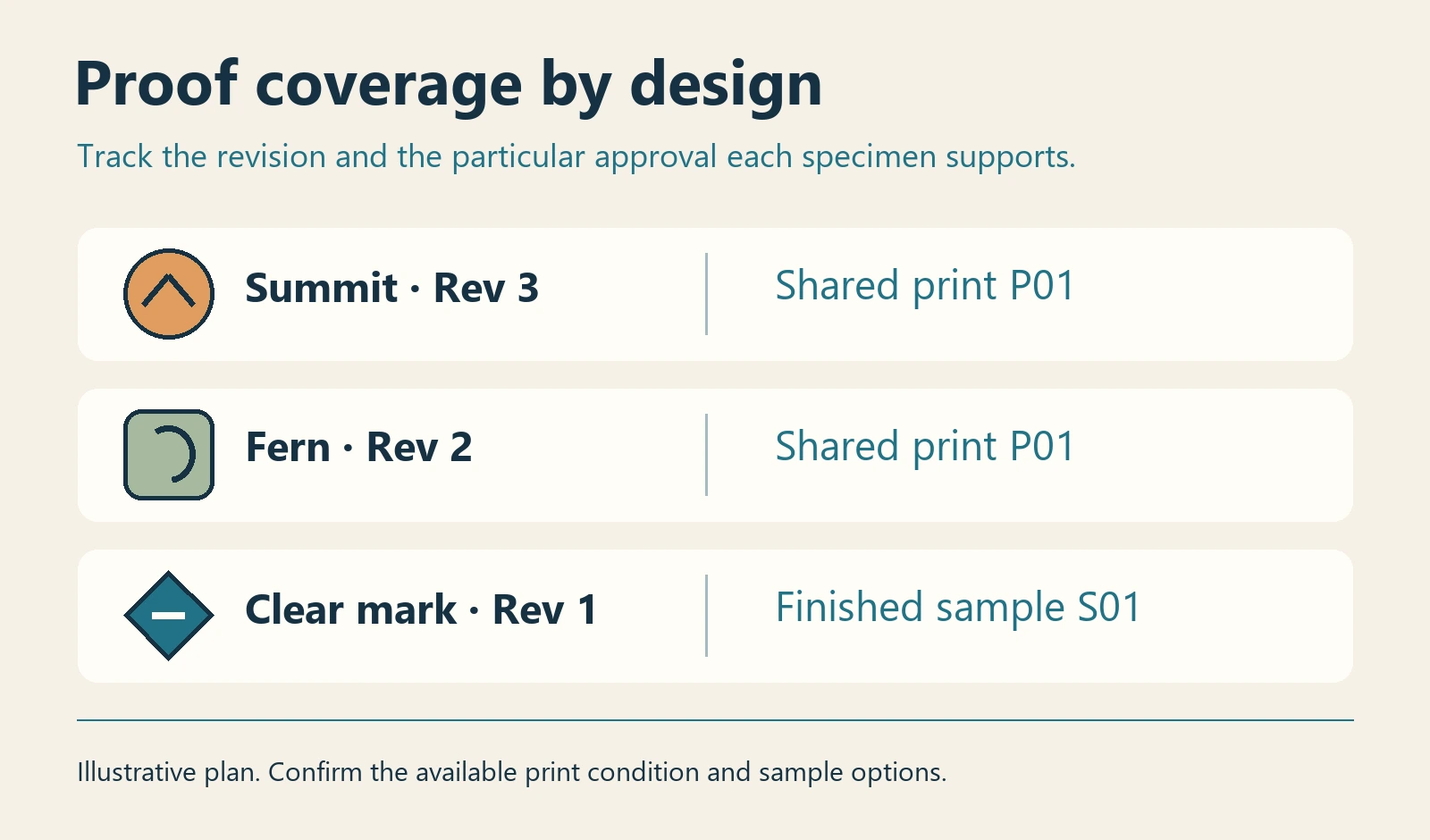
Make a coverage list before choosing the samples
List each design, released revision, finished size and proposed material and finish. Add the feature that could prevent approval: a shared brand color, a pale illustration, narrow lettering or a particular cut edge. A design using the same nominal vinyl as the rest can still have artwork that deserves its own visual check.
Begin by matching each design to the digital proof actually used for release. Verify the file identity, content and size. Record physical color, finish or handling as separate questions wherever they matter. For the difference between artwork approval and physical approval, see the sticker proofs and samples guide.
Ask what can be compared on one print
Where several designs share a proposed print condition, ask if the supplier can prepare an identified multi-design print reference. Ask which source files, scale, material, white print where relevant and finish it uses. Fogra's proof substrate guidance links proof paper to a specific reference printing condition. A simulation is useful within its stated conditions. Request a different reference when the answer depends on the actual clear or reflective face, production finish or converted edge. Fogra proof substrate guidance.
A simple example is a collection of two white-stock illustrations and one clear design with white lettering. A shared print might let the buyer compare the first two, if the supplier confirms the method and scope. Ask for a representative clear specimen where lettering visibility on the intended background controls the decision. A reduced-size print could help discuss broad color areas while leaving fine detail and final scale open.
| Question | Evidence to request | Keep open when |
|---|---|---|
| Is the correct revision included? | Identified artwork proof for each design and confirmed dimensions. | A row refers to an old file or one design is missing. |
| Can these designs be judged together? | Marked common print reference and the condition and scale it represents. | The intended construction or critical color differs from the reference. |
| Does an exception work in use? | Relevant finished specimen for that design's fit, finish, contrast or handling. | The specimen omits the feature the buyer must approve. |
Release the designs the approval actually covers
Record the reviewer and approved points by design. A small feature can need its own specimen even when the rest of the range is ready. If one design is still open, ask whether the production setup allows the other designs to be released separately. Compare any additional charges and timing with waiting for the complete approval; preserve the hold when the proposed route depends on all versions being ready together.
Send the design and revision list, quantities per design, finished dimensions, shared construction and exceptions. Ask which designs a common proof can represent, which need separate specimens, and what each route costs and takes. Confirm sample options under the ZC sample policy. See ZC custom die-cut sticker options for individually supplied artwork pieces.