
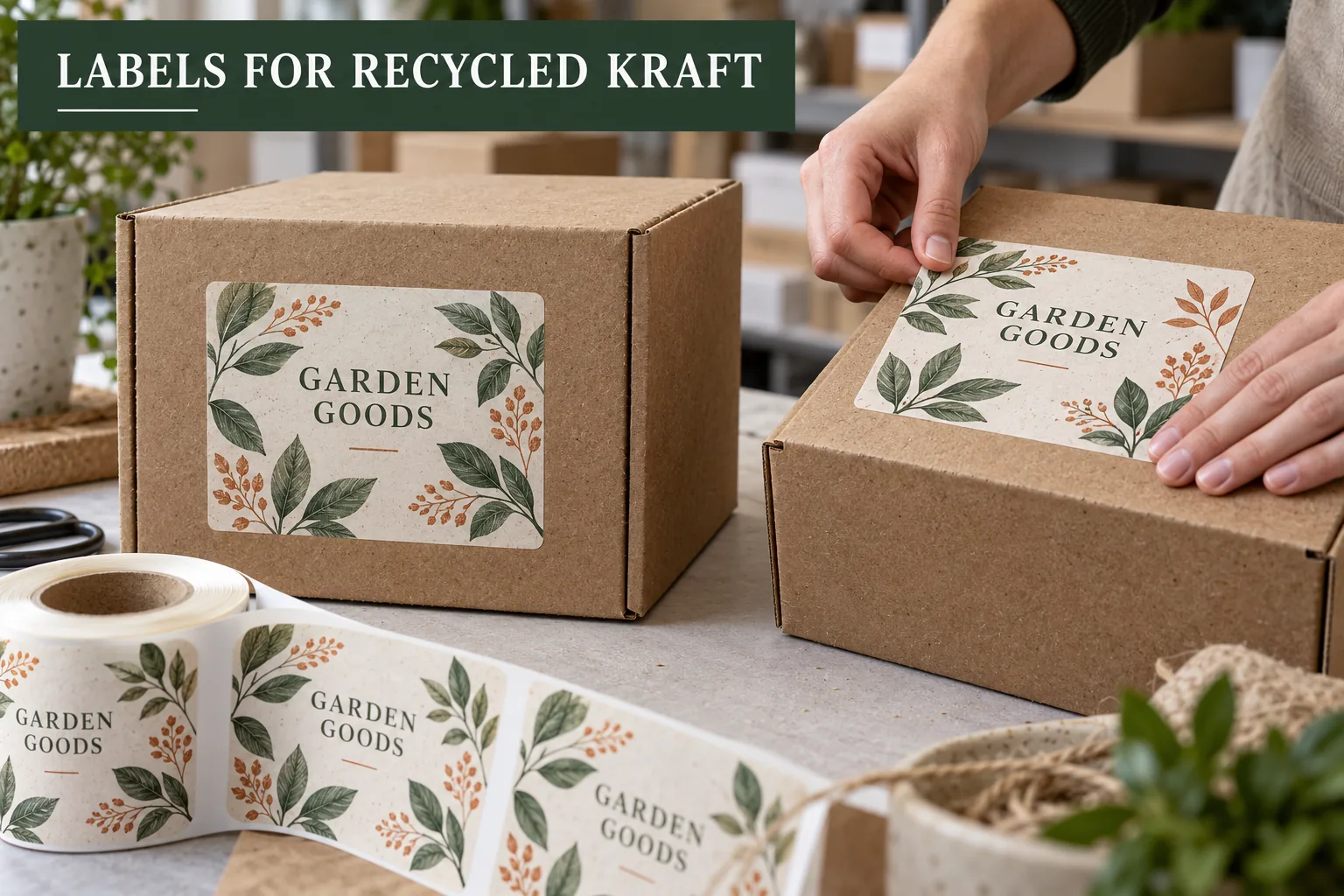
A kraft carton can make a product look grounded and simple. It can also expose a label specification that was approved only on smooth white board. Fibers rise from the surface, dust remains after folding and the brown background changes the apparent color of a pale illustration. I would bring an actual production carton to the artwork review.
Recycled content does not describe one uniform surface. Ask whether the carton is uncoated, coated, heavily textured or handled through a dusty packing process. The label needs a reasonable contact area on the assembled box, clear of fold lines and high-rub edges.
Inspect the Carton Before Choosing a Label
| Pack feature | Possible issue | Physical check |
|---|---|---|
| Raised fibers | Reduced contact at edges | Apply a final-size sample |
| Dust from folding | Unpredictable adhesion | Test after normal packing |
| Dark brown stock | Low contrast | View artwork at shelf distance |
| Box score or flap | Movement and lifting | Open and close the labeled box |
A fully illustrated botanical label with a light ground can give a brand a clear focal point without covering the entire carton. Use original art and make the product name large enough to survive the brown frame around it. A transparent label may let the kraft texture show through, but fine lettering can lose contrast; test the printed sample on the actual stock.
Check Hold After Normal Handling
Apply the label at the same stage the packing team will use. Press it as they would, stack cartons, move them into their shipping case and inspect the corners later. If the box is refrigerated, humid or handled with oily hands, include that condition. Do not promise adhesion from a material name alone.
If the sticker is a closure seal, separate two jobs: presenting the brand and keeping the flap shut. A decorative label can look good while a weak closure opens in transit. Test the seal across the real assembled flap. A different shape or contact area may be more useful than a heavier-looking illustration.
Keep Sustainability Copy Evidence-Based
鈥淩ecycled carton鈥?is not proof that the whole labeled pack is recyclable or compostable. The packaging owner should confirm material composition, adhesive and the collection route before printing an environmental claim. Leave unverified badges off the proof. It is easier to add approved copy later than to defend a claim made for decoration.
- Send samples of the final folded carton
- Mark score lines, flap and usable flat panels
- Proof color and type on the brown stock
- Test adhesion after normal dust and handling
- Check closure separately if the label seals a flap
- Approve every environmental statement with evidence
Read the surface-matching guide for adhesive questions and the box sticker guide for closure placement. Share the actual carton and approved artwork through the specification planner. The carton is part of the proof, not just the background.
Questions Before You Order
Will a standard paper label stick to every recycled carton?
No. Fiber texture, coating, dust and storage conditions vary. Test the proposed adhesive on the actual production carton.
Can the pack claim the label is recyclable?
Only when the specific label construction, carton and local collection route support that claim. The packaging owner must approve the wording.
Does a kraft carton change printed color?
It can change the overall visual impression and the contrast around the label. Proof the artwork on the real brown carton, not only against a white monitor background.