
The buyer asks for a certificate for a children's sticker pack. The printer is quoting a sheet, the designer is showing a sleeve and header, and the brand intends to add an activity booklet later. Before requesting a reassuring document, identify which finished product the request concerns.
For a kids sticker order, define the intended user, use, sales market and complete supplied contents first. Then have the responsible product-compliance owner identify the applicable requirements and compare available evidence with that exact proposal. A friendly illustration, an easy peel or a report bearing a laboratory name cannot complete that decision on its own.
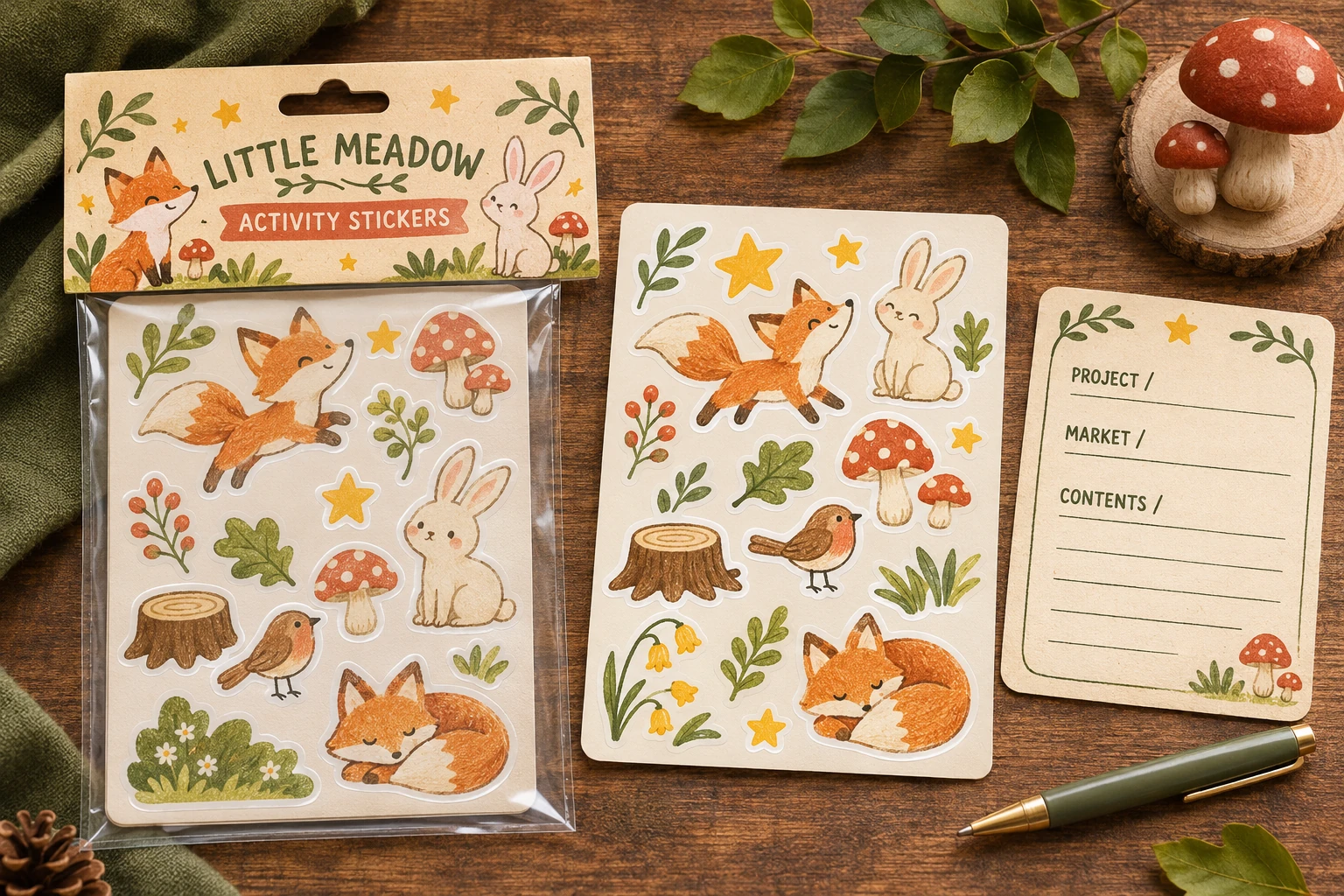
Name the product that reaches the user
Keep the purchased component and the final retail or activity product distinct. Record whether the quotation covers printed sheets only, a packed sticker collection or components for a buyer-assembled kit. List the other included parts and the party supplying each. A supplier cannot match an evidence request to a booklet or accessory that has not been identified.
The ZC Labels kids sticker range includes reward, classroom and activity directions. Its artwork and format examples do not establish an age grade or a safety credential. The document-review page requires requests to match the actual material, ink, adhesive, finish, use and destination.
Describe how the product will be used rather than relying only on the collection name. Include whether an adult distributes individual pieces or a customer receives the complete sheet and packaging. The responsible reviewer needs the real arrangement; this article does not determine the classification of an unreviewed kit.
Let the intended market control the document question
For the United States, CPSC's children's-product guidance defines the category by products designed or intended primarily for children aged twelve or younger. It identifies factors including intended-use statements, presentation and consumer recognition. A purchase order's casual wording should not replace the responsible owner's classification review.
Have that owner or its qualified adviser identify the applicable requirements, relevant exceptions and document responsibilities for the actual product. A different market needs its own review. Do not copy another brand's badge, age wording or test list because its animal artwork looks similar.
Map each offered record to an identified item
Ask what the supplier can actually provide for the proposed construction. Retain the document's issuing organization, product or material reference, covered specimen, date and stated scope. Where the relationship to the quoted sticker is unclear, ask for that mapping before treating the file as accepted evidence.
| Project record | Question to resolve | Decision owner to identify |
|---|---|---|
| Finished contents and version | Which sheets, packaging and other parts are included? | Brand or product owner |
| Intended user, use and market | Which product and requirements are being assessed? | Responsible compliance owner or adviser |
| Proposed construction | Which face, adhesive, print and finish references are offered? | Supplier and technical reviewer |
| Available supporting document | Which identified item and scope does it represent? | Document provider and accepting reviewer |
| Unrepresented part or changed material | What additional review remains before release? | Named owner of that open decision |
A file for one material should not silently become approval of an assembled collection. Equally, an unfamiliar report title is not enough to reject relevant evidence. Ask the accepting reviewer to state what question it answers and what remains unresolved. Keep confidential supporting files in the agreed business channel rather than reproducing them on public packaging.
Separate supporting tests, certification and the filing task
CPSC's Children's Product Certificate page explains certification for children's products subject to applicable children's product safety rules, based on the relevant testing framework. A supporting test report and the responsible party's product certificate are different records. Do not rename one as the other or imply that ZC Labels holds an unverified certificate.
The same page flags current certificate eFiling requirements. The responsible importer or compliance owner should check the applicable current filing route separately; obtaining a PDF from a printer does not, by itself, complete an import process. This purchasing checklist supplies neither a product-specific legal determination nor a completed certificate.
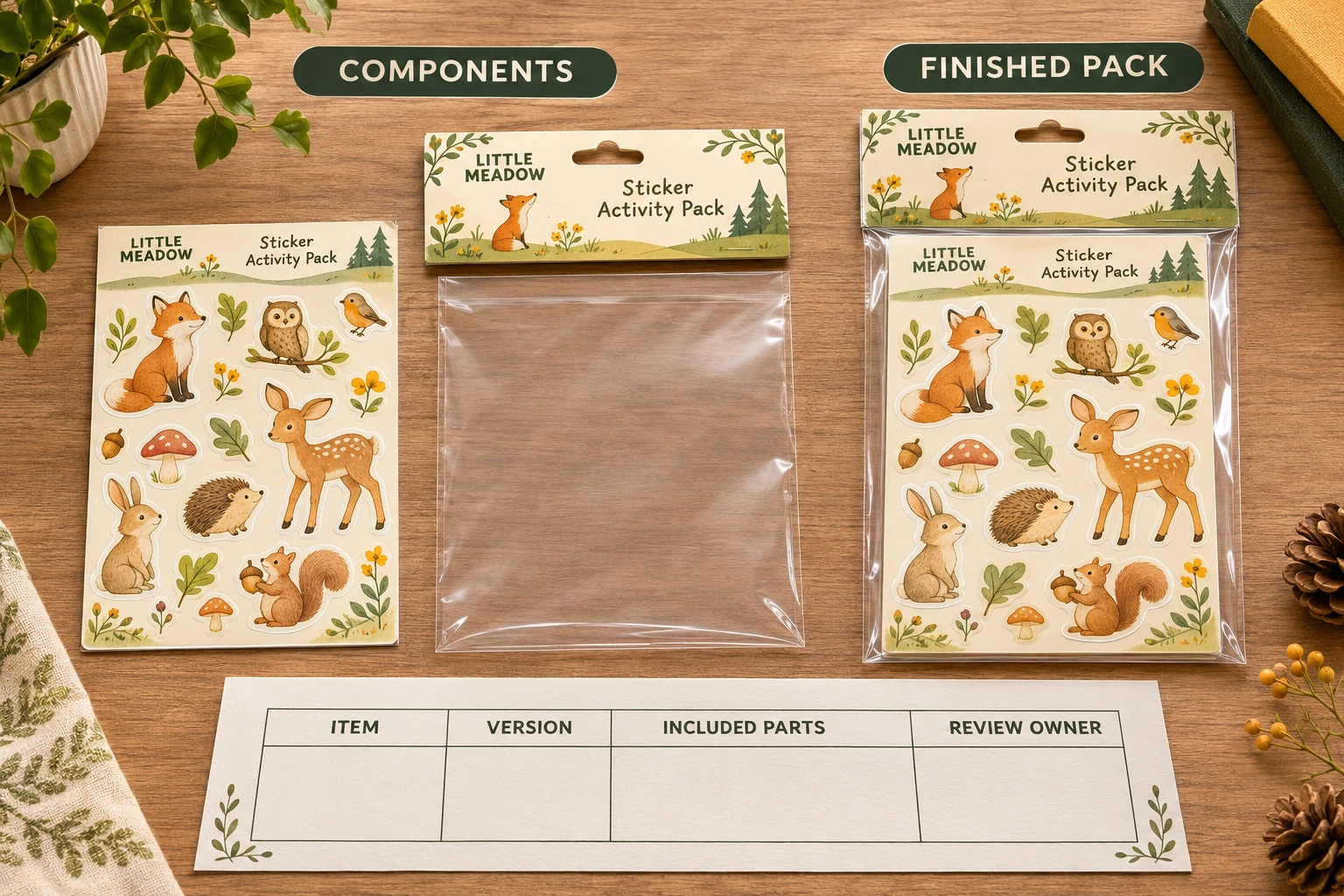
Keep physical proof approval within its job
A representative sample can help review size, handling, print and pack contents. It cannot establish an undocumented safety claim because the pieces peel neatly. Conversely, relevant supporting documentation does not show that a small printed instruction remains readable on the actual sheet.
Use the proof and sample scope guide to assign a purpose and reference to each review. If the sample differs from the intended construction, keep that difference beside both the physical observation and document request. Availability, charges and timing follow the project-specific sample policy.
If a face material, adhesive, ink, finish, pack component or intended use changes, return the changed reference to the accepting owner. Ask what earlier evidence remains applicable. Do not retain a familiar file name as proof of equivalence after its represented item has changed.
Release only the scope that has been resolved
If required evidence or classification remains open, keep the affected product release pending. The owner may compare another documented proposal, a revised product brief or a different schedule. Changing the declared age or deleting a badge without an appropriate underlying review does not resolve the original question.
Send ZC Labels a kids-sticker document brief with the intended users and use, sales market, complete contents, artwork/version, dimensions, quantities, construction preference and the owner's exact document request. Identify who will accept the evidence and which parts are supplied elsewhere. Those inputs allow a specific availability and scope discussion without inventing a blanket child-safe promise.