
A decorative star looks bright in a supplier photograph taken just after illumination. The intended gift item may spend its day inside a closed box and be opened in a dim room. Those are different conditions. For glow-in-the-dark stickers, the procurement decision must include how the material receives light and when the recipient is expected to see the afterglow.
This guide concerns decorative effects. If a project involves emergency marking or another safety function, the responsible specialist must define the applicable product and acceptance requirements; a decorative sample does not establish that suitability.
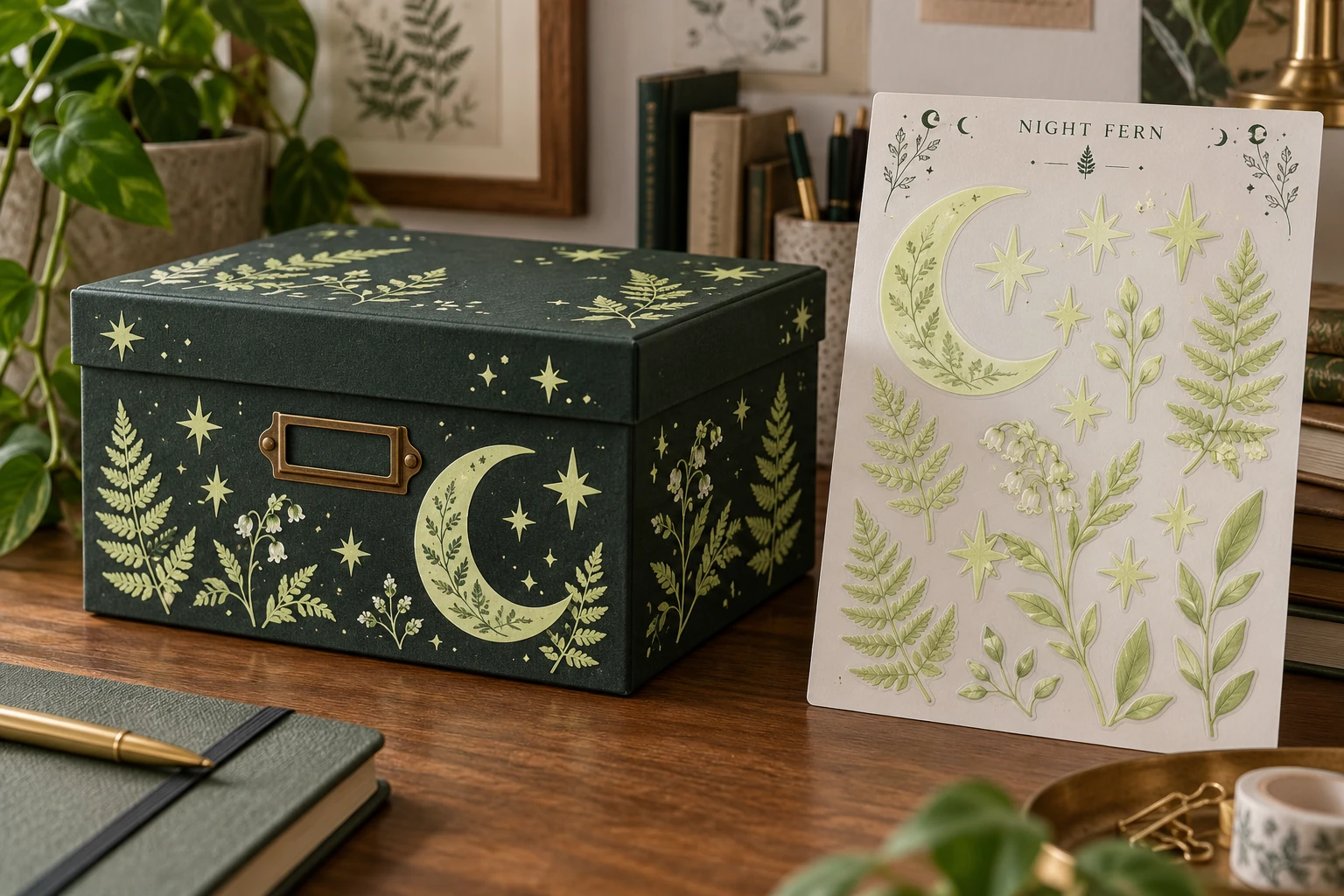
Distinguish afterglow from reflection and fluorescence
A photoluminescent effect needs prior exposure to suitable light and then becomes less intense with time in the dark. It is a different task from reflecting an external light source toward an observer or using a fluorescent daytime color. Ask which mechanism the supplier proposes instead of using glow as a generic word for bright material.
ORAFOL's ORALUX product description provides a specific example of a chargeable decorative film with declining intensity. Its stated properties and timings belong to that product and are not a promise for an unidentified printed sticker. Obtain current documentation for the actual construction offered.
Define the light-to-dark sequence
Describe where the recipient keeps the item, which light it encounters and when the effect matters. A sticker on an exposed notebook cover has a different history from a sticker stored inside an opaque envelope. If the product depends on deliberate charging, the product owner needs to decide whether that is a reasonable user action and what substantiated instruction can be supplied.
Have the technical provider define suitable conditions for a representative review. Preserve the light source, exposure arrangement, transition into darkness and observation stages in the record. Do not invent a universal charging time or infer a visible duration from a strongly edited photograph.
| Question | Reference needed |
|---|---|
| Where does the item receive light? | Actual display or handling position |
| When should the effect be seen? | The intended interval and observation task |
| What covers the active area? | Final artwork, ink and protective finish |
| What is promised to the customer? | Owner-approved wording supported by the identified product |
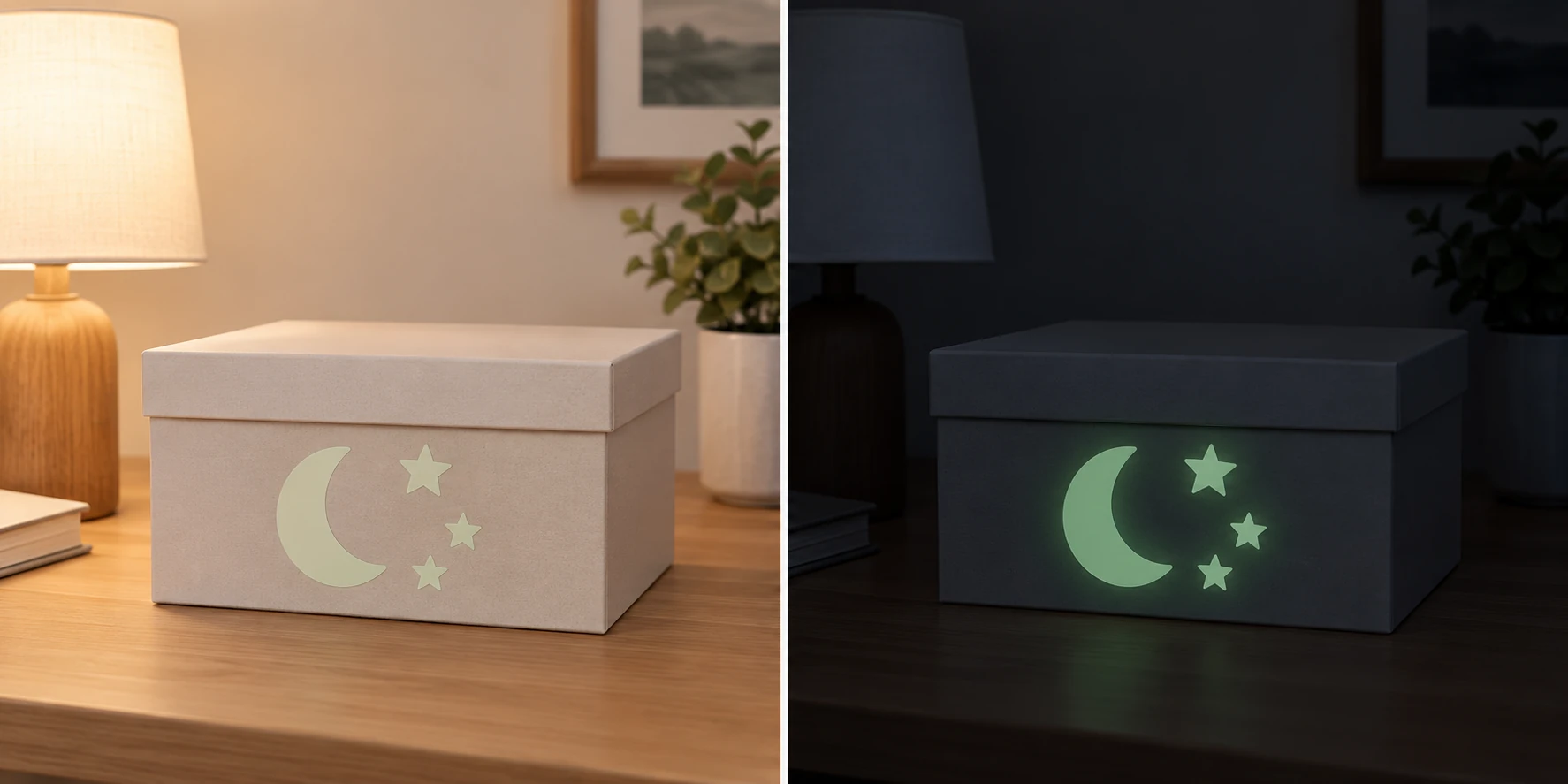
Review the printed construction, not only a bare swatch
Mark where the material should remain active and where the illustration needs solid color. Ask the producer how the chosen inks and finish affect the desired visible effect. A bare luminous sample cannot establish the appearance of a heavily printed design.
Compare the final artwork at its actual size in ordinary light and under the agreed dark-state observation. The buyer may accept a strong decorative silhouette while keeping small wording outside the active area. If the required text cannot be read reliably in the intended state, change the design or requirement rather than assuming the effect will solve it.
Keep application and care evidence separate
Identify the actual contact surface, use conditions and proposed adhesive. A visible afterglow does not approve attachment, removability or cleaning resistance. Ask for evidence appropriate to the complete decorated item and keep those observations separate from the optical review.
For repeated orders, retain the material reference, artwork and active-area map, sample identity and observation conditions. A change to ink coverage or protective finish can affect the reason the material was selected, even if the sticker shape stays the same.
Send the artwork, effect area, actual dimensions, application surface, expected light and dark sequence, intended claims and quantity through the decorative sticker enquiry. Ask whether an appropriate construction and representative sample are available. Use the sample approval guide to state what the reference does and does not authorize before release.