
A decorative model box needs tiny lettering and separate botanical marks with little visible surrounding film. The proposal says rub-on transfers. Another supplier offers ordinary stickers or water-slide decals. The same artwork does not make these the same delivered product: the user needs a process they can perform on the actual object.
For dry transfers, define the pressure-activated transfer arrangement and the retained result. Keep it separate from a cut-vinyl composition carried on application tape, a water-release decal and a UV-printed transfer system. Those routes need their own instructions and samples.
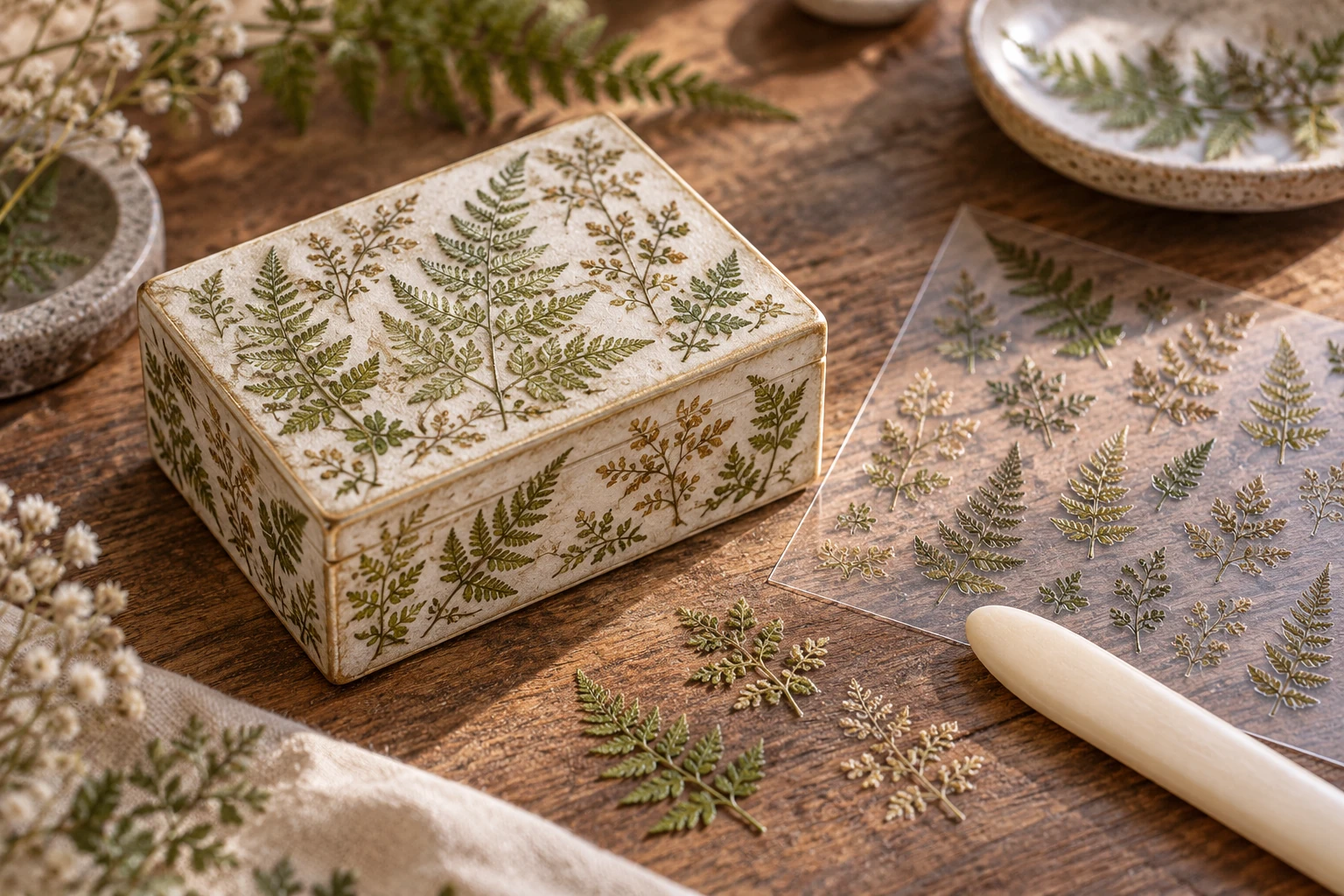
Describe the supplied sheet and intended retained image
Ask the provider which layers are supplied, what the operator handles and what remains after the carrier is removed. Mark whether open spaces between letters must remain physically open or a surrounding transparent film is acceptable. A clear-background screen mockup cannot establish that construction.
Woodland Scenics' dry-transfer instructions describe positioning a carrier, rubbing the design and checking its transfer. They illustrate a product-specific process. Obtain directions for the exact proposed material rather than treating one model-making product's steps as a universal production method.
Check placement access before approving artwork
The operator needs to hold the carrier stable and reach the design with the appropriate tool. Show recesses, raised edges, curves and nearby parts that affect access. A flat loose sample may be straightforward while the same artwork is difficult to reach on an assembled object.
Where several marks must remain aligned, identify which are transferred together and which are separate operations. Ask whether the supplier can provide a suitable arrangement. A tiny dot missing from a fine lettering composition can change the result even when a large logo transfers neatly.
| Review item | Practical question |
|---|---|
| Carrier outline | Can it sit in the intended location without obstruction? |
| Smallest retained detail | Can it complete the actual transfer sequence? |
| Grouped artwork | Does the arrangement preserve the required spacing? |
| Surface finish | Is it compatible with the proposed process and later care? |
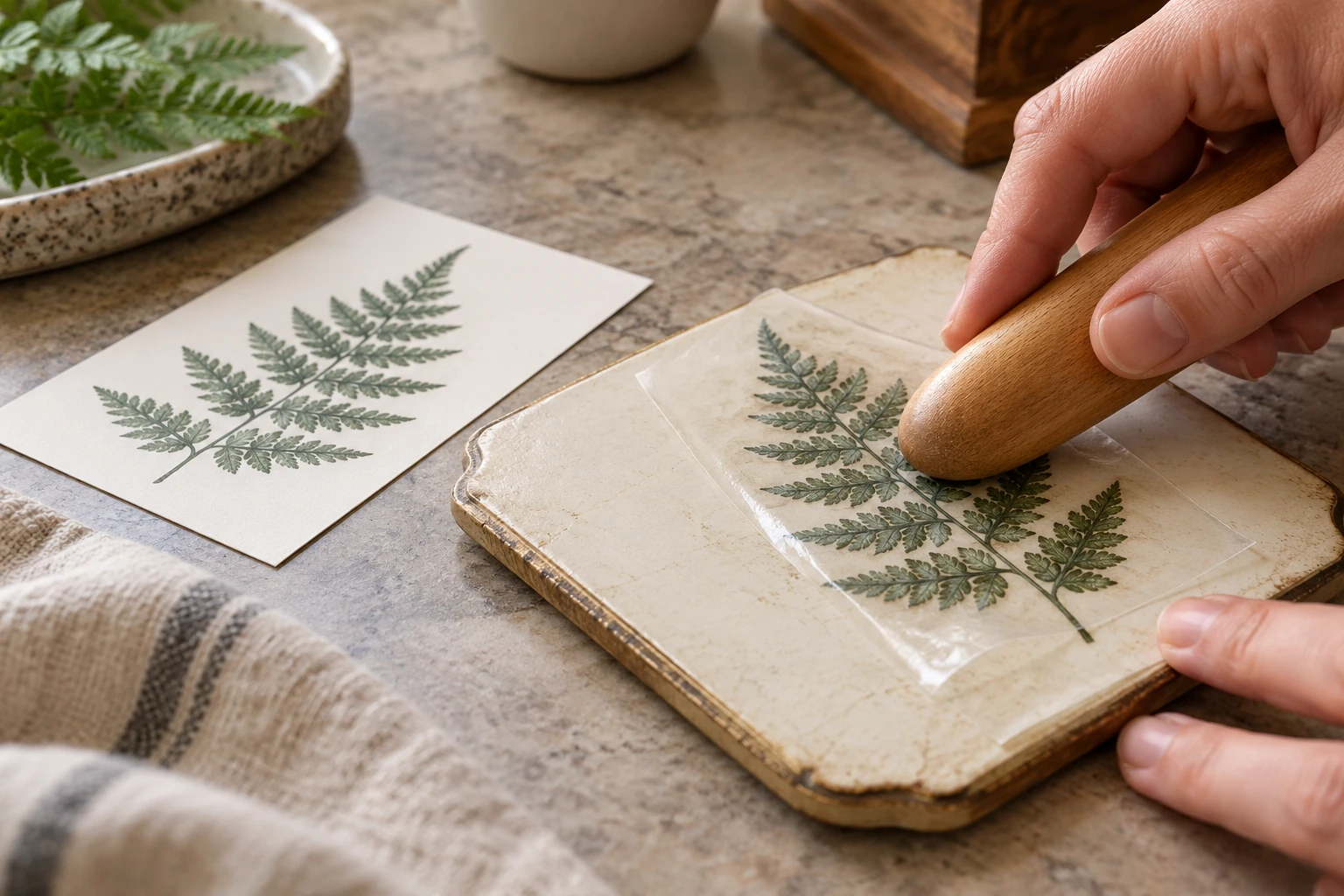
Trial the complete application sequence
Use the actual object finish and intended artwork size. Ask the provider to identify preparation, handling and carrier-removal instructions. Check the whole design, especially small marks and isolated strokes, before recording the sample as complete. Preserve partial or unsuccessful examples for review.
If the sequence is unreliable for the intended operator, compare a simpler layout, an application fixture or a conventional printed sticker with an accepted perimeter. A water-slide route may offer another option but introduces a different handling process. Have the buyer choose based on a representative sample and available production scope.
Confirm protection and use after application
If a protective coating is proposed, identify the complete system and have compatibility reviewed before it is applied to finished stock. A neat dry transfer does not prove resistance to handling, cleaning or outdoor exposure. Avoid assuming that any clear coating will improve the result without changing appearance or the underlying surface.
Keep the transfer reference, artwork version, object finish, application instructions and accepted observations together. If the smallest detail, surface or finishing route changes, identify which checks need repeating. Do not treat a reused design file as a complete reorder approval.
The transfer-tape comparison explains cut graphic elements on a temporary carrier. For a specialty decoration enquiry, send the proposed retained image, size, difficult features, object photographs, application access, quantities and delivery state. Ask which dry-transfer or alternative sticker route is available and what sample is needed before release.