
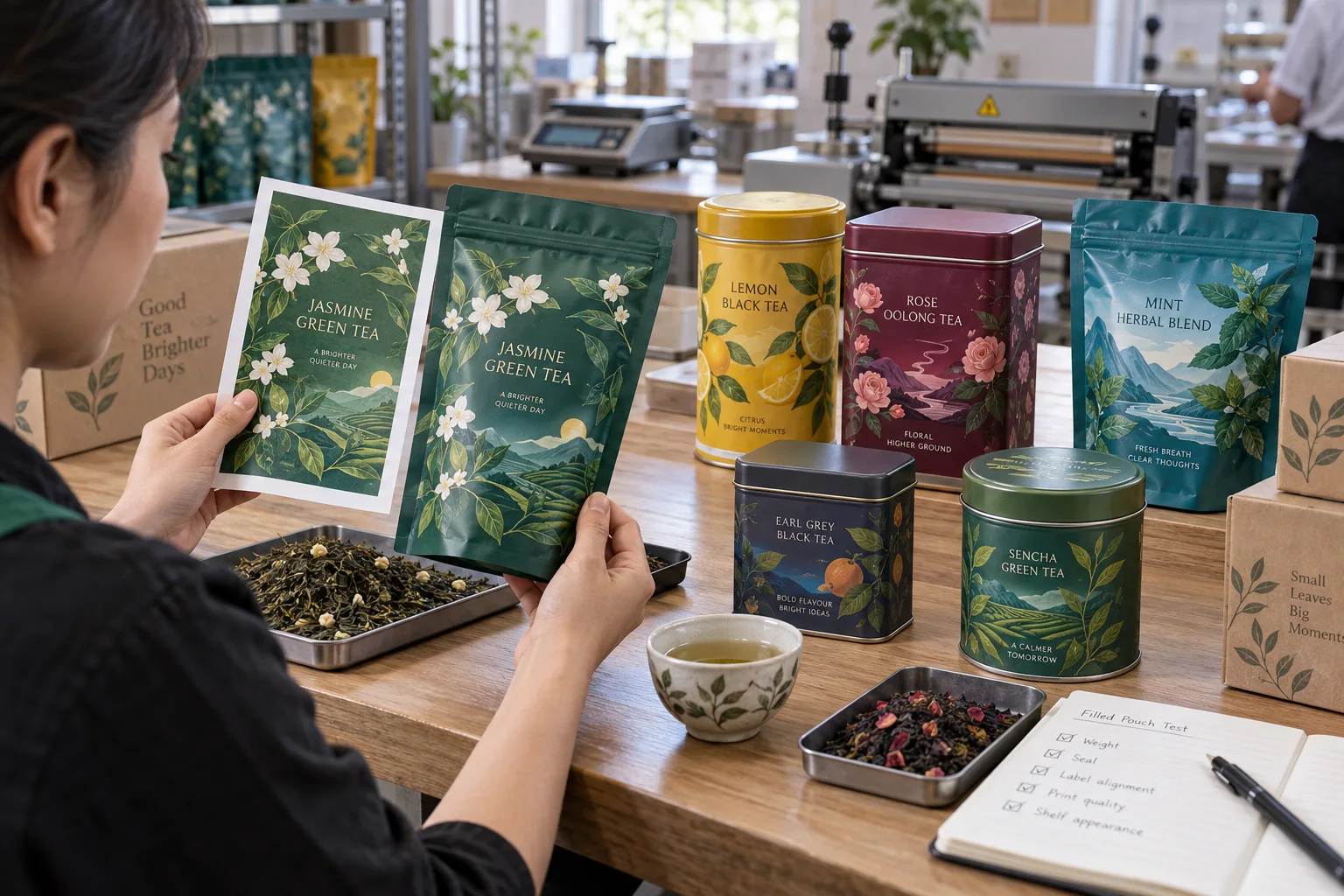
Tea packaging often begins with mood: quiet mountains, garden flowers, bright citrus or a traditional brewing ritual. That is useful creative material, but the production conversation begins somewhere more ordinary. Is the label going onto a rigid tin, a paper pouch, a laminated stand-up bag or a box?
The same artwork can behave very differently on those surfaces. A beautiful wide label may bridge a pouch gusset. A small round seal may sit well on a tin lid but add little information to the body. We first match the label structure to the pack, then let the visual story grow inside that boundary.
This is the tin-versus-pouch overview. If the buyer has already chosen a tin and needs to decide what goes on the lid, what stays on the body and what changes at refill, use the focused tea tin label guide. For a flexible pouch, keep the zipper, seals and filled shape in the brief below.
Tins and Pouches Need Separate Decisions
A cylindrical tin needs a measured straight wall and a deliberate seam. A rectangular tin needs corner clearance. A flexible pouch changes shape when filled, and its zipper, seal area, folds and gussets should stay clear. Measure the filled pouch rather than an empty flat film sample.
If the pouch already has a high-barrier construction, the label should not be described as the reason the tea stays fresh. The package and closure do that work. The label provides identification, information and presentation.
| Package | Label opportunity | Common mistake |
|---|---|---|
| Round metal tin | Body wrap plus lid identifier | Entering the top or bottom roll edge |
| Rectangular tin | Front panel and small back panel | Placing corners too close to tin edges |
| Stand-up pouch | Large front story and back information | Crossing zipper, seal or expanding gusset |
| Tea gift box | Collection label or closure seal | Using the seal as an unsupported quality mark |
Original Artwork Can Carry Origin and Flavor
Tea does not need blank labels to avoid infringement. Original jasmine flowers, bergamot fruit, mint leaves, tea terraces, ceramic cups and abstract steam patterns can give a range a clear visual voice. These elements should describe the specific product honestly rather than imitate the symbols or layout of a famous tea house.
We like to keep the brand block, tea name, type and net-content area stable. Illustration and accent color can change by SKU. A mountain black tea can use deep green and a ridge drawing; a citrus blend can use warm yellow and an original peel illustration. The range stays related without becoming repetitive.
Make Brewing Information Easy to Use
Brewing guidance is practical content, not a decorative paragraph. Temperature, amount and time should be readable and grouped. Simple original icons can help, but the numbers need enough contrast and size to work on the final package.
Ingredient, allergen, origin, organic and certification statements require brand-side approval and appropriate records. A landscape illustration can express place as a design theme; it should not become an unsupported geographic or certification claim.
Test the Label on a Filled Pack
Fill the pouch or tin to its normal volume. Apply the label using the planned hand or machine method. Open and close the package repeatedly, stack it with neighboring packs and place it in the intended gift box or shipping carton. Watch for edge lift, wrinkles, abrasion and information hidden by the expanded shape.
For paper-like materials, also consider how the surface responds to kitchen moisture and hand oils. For high-gloss film, check whether shelf glare hides the tea name. The finish should support both the story and the use environment.
Our Tea Packaging Test List
- Identify the exact tin, pouch or carton construction
- Measure usable space on a filled package
- Keep clear of zippers, seals, folds, gussets and tin edges
- Print the tea name and brewing guide at actual size
- Compare every botanical illustration and SKU color
- Apply labels with the planned packing workflow
- Run opening, closing, stacking and carton-abrasion checks
- Confirm all ingredient, origin and certification wording
What We Would Put in the Quote Request
Send the final package or specification, filled dimensions, surface description, label position, artwork, number of teas, quantities by SKU, application method, finish direction and gift-box or carton requirements. Tell us which information changes between blends.
A useful tea label gives the blend a visual world while keeping the buying decision simple. The package protects aroma; the label earns recognition through clear information and original, relevant artwork.