
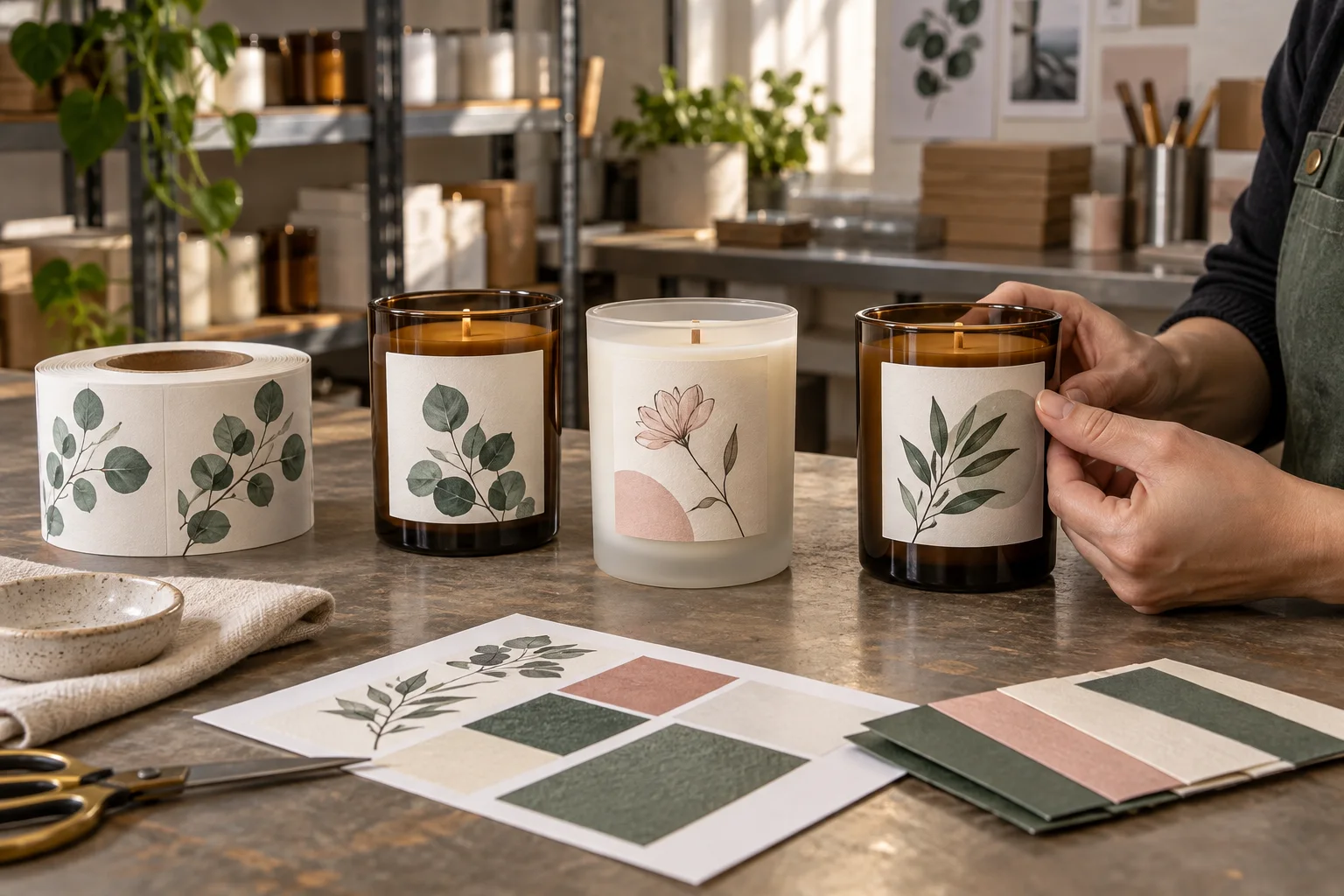
A familiar candle-label request begins with three words: premium, waterproof and strong. They sound decisive, but they do not tell us what the label must survive. The first useful picture is usually not the logo. It is the actual jar.
From the production side, we want to see whether the container is smooth glass, frosted glass, coated metal or a textured vessel. We also want to know where the label sits, how large it is, whether fragrance oil reaches the outside and whether the product moves from a cool filling room into warm retail or shipping conditions. The jar has more authority than the mood board.
Start With the Container, Not the Material Name
A clear glass jar offers a different bonding surface from powder-coated metal or heavily frosted glass. A small flat front panel is easier than a wrap that crosses a taper. If the label approaches a shoulder, base radius or seam, the material may keep trying to return to its flat state.
Send a straight-on photo, a side photo and the usable label area. If possible, provide an empty production jar. A dimension copied from a supplier drawing is useful, but a physical fit test reveals how the label looks after the glass curve, border and visual center are considered together.
| Question | Why it changes the label | What to confirm |
|---|---|---|
| Jar surface | Texture and coatings affect contact | Glass, frosted glass, painted metal or another finish |
| Label position | Curves and heat exposure are not equal everywhere | Front panel, base label, lid seal or wrap |
| Handling | Oil, moisture and rubbing attack different parts | Filling, wiping, packing, retail and consumer use |
| Presentation | Paper, clear film and textured stocks create different signals | Natural, glossy, transparent, metallic or matte direction |
Heat Is a Use Condition, Not a Marketing Claim
A candle container becomes warm, but the exact temperature at the label depends on the vessel, wax, wick, fill level, burn time and label location. A factory should not invent one universal heat-safe number for every candle project. The brand responsible for the finished candle should define the test conditions and confirm that the complete product is safe and fit for sale.
Our narrower job is to help compare label constructions under the stated conditions. Watch for edge lift, shrinkage, adhesive movement, discoloration and finish change. Test more than one jar and include the intended burn cycle. A beautiful sample that is never warmed answers the wrong question.
Fragrance Oil and Cleaning Can Reach the Outside
Oil may appear during filling, from a spill or through repeated handling. Wiping the jar with an unsuitable cleaner can leave residue before application. Even a durable face material can fail if the adhesive meets oil instead of the container.
Apply labels to clean, dry jars using the same preparation method planned for production. If oil resistance matters, expose a finished label, not only a loose printed sample. Check the face, print, laminate, edges and bond after the contact and wiping routine.
Choose Paper or Film by the Real Trade-Off
Paper can give a tactile, crafted appearance and may suit dry indoor products. Film is often considered when moisture, oil, scuffing or a clear-label effect matters. Neither choice wins automatically. A thick textured paper may look excellent and resist a tight curve; a thin film may conform better but show every bubble or speck beneath it.
Matte and gloss also change the result. Matte can soften glare in product photography. Gloss can deepen color and make wiping easier depending on the construction. Review the finish on the jar under the lighting used for retail photos, not only beneath a desk lamp.
A Practical Candle Label Test
- Use the final jar from the intended supplier
- Prepare the surface with the real cleaning process
- Apply at the expected room and container temperature
- Check label alignment, curve and edge contact after application
- Allow the adhesive to develop before severe handling
- Run the brand's controlled heat and burn evaluation
- Test fragrance oil, wiping and packing abrasion if relevant
- Photograph and retain the approved sample for reorders
What We Would Put in the Quote Request
Send the jar material and finish, usable label area, artwork, quantity per design, paper or film preference, matte or gloss direction, application method and packing requirement. If the same collection includes lid seals or base warning labels, list them separately. They do not necessarily need the same construction.
The expensive mistake is choosing a material from a screen and discovering the physical conflict after every scent has been printed. Test the jar first. Then let the artwork become beautiful inside a specification that can actually hold it.