
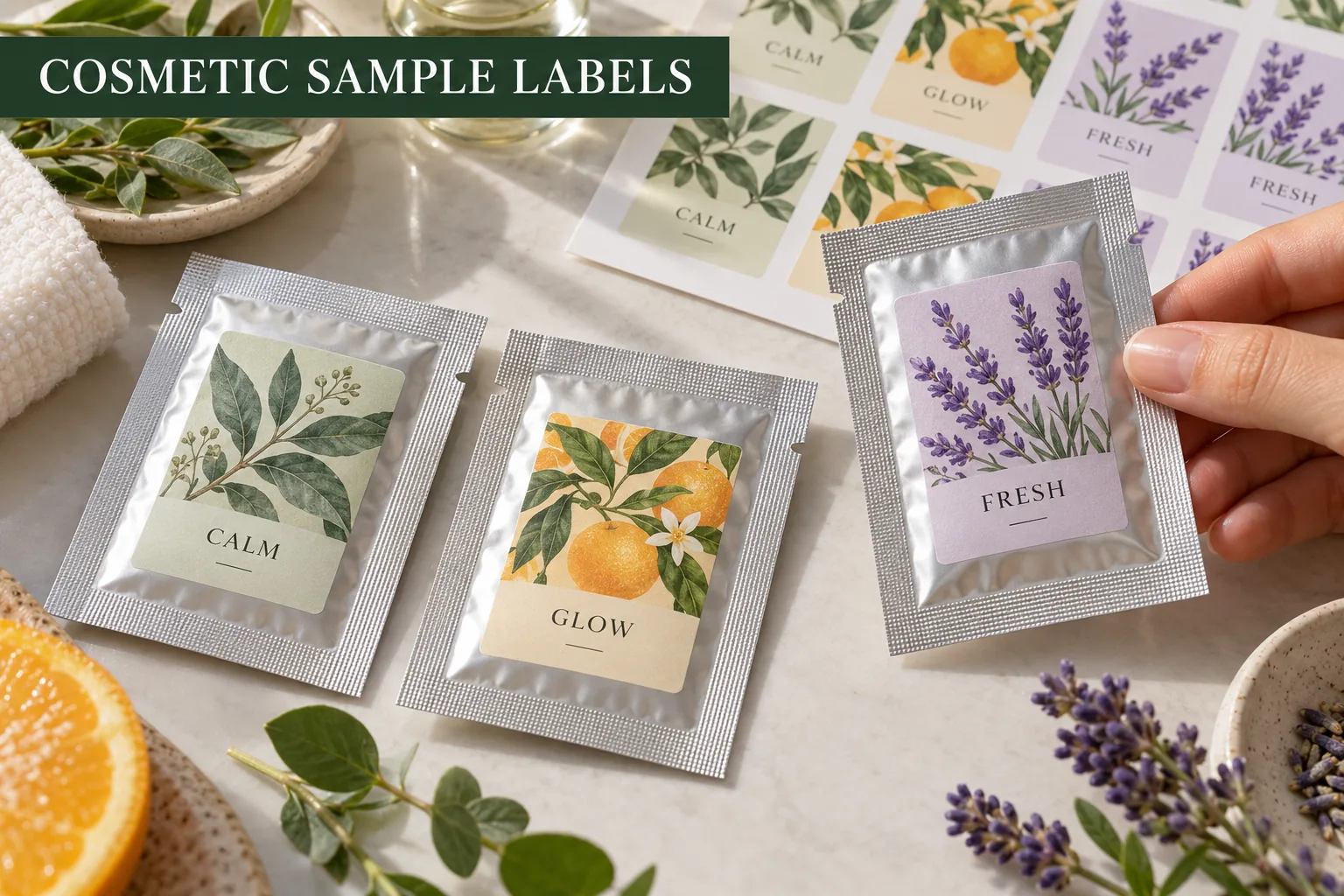
A cosmetic sample sachet is easy to design at 300 percent zoom. In a customer's hand it is small, flexible and often slippery. The tear notch must work, the product variant must be obvious and the label cannot make the sealed edge behave differently. I would ask for a filled sachet before discussing a polished mockup.
Measure the flat face, then mark heat seals, notch, crimping and the area that bulges after filling. A label placed across a seal edge may lift or interfere with opening. A label placed on the most flexible center may wrinkle. Those are packaging questions to test with the sachet owner, not details to guess from a PDF.
Choose a Real Usable Panel
| Feature | Risk | Proof action |
|---|---|---|
| Heat-sealed edge | Irregular contact or opening interference | Mark a clear setback |
| Tear notch | Sticker bridges opening path | Open an applied sample |
| Filled center | Flex and label wrinkling | Handle a filled sachet |
| Variable lot area | Information changes by batch | Agree on coding owner and method |
An original botanical illustration can distinguish a calming blue variant from a bright citrus one, but the product name needs equal attention. Avoid using color as the only cue: a packer or shopper should still identify the sample under ordinary light. If a label sheet contains several variants, confirm the count and approved artwork version for each.
Keep Claims and Small Type Honest
The cosmetics brand is responsible for ingredient, warning, origin and other market-specific information. Do not invent a clinical claim or certification icon just to fill space. If the sachet cannot hold readable required information, the owner needs to decide whether an outer card, sleeve or different pack format is appropriate. The print proof should use supplied, approved copy.
Check the smallest text at actual physical size on a printed proof. Contrast can change on metallic or translucent film. If the design uses a clear label, test it over the real sachet background; the color underneath may make fine letters disappear. A beautiful enlarged screen render is not a readability test.
Trial the Filled, Handled Sachet
- Send filled sachet samples, not only a dieline
- Mark seals, notch and flexing areas
- Approve all product text and claims by variant
- Proof tiny type at final print size
- Test label adhesion after normal handling
- Open the sachet with the label applied
The cosmetic packaging guide covers larger formats; the small-text and white-ink guide helps with contrast. Share a real sachet photo and the approved copy through the specification planner. A small label still has a full job to do.
Questions Before You Order
Can one label fit every cosmetic sample sachet?
Not safely by assumption. Sachet dimensions, seal widths, film finish and fill shape vary; trial the label on the exact filled pack.
Can tiny required text be placed on the front sticker?
The responsible brand must approve the required content and minimum readability for each market. If the space is insufficient, reconsider the pack or accompanying information rather than shrinking text blindly.
Should the label cross a heat seal?
Do not place it there without package-owner review. Keep normal label placement clear of seal edges and tear notches so opening and seal integrity are not compromised.