
A collectible gift sticker is meant to show a butterfly opening its wings when the viewer tilts the item. Two attractive artwork files are ready, but the purchase still needs a decision about how those images change through the actual viewing movement. A flat proof can establish content; it cannot establish the finished lenticular effect.
Begin with one effect and its intended handling. Is the person tilting a small item in their hand, moving past a display or looking for depth in a stationary image? Give the specialist that use before selecting a lens from a generic description such as 3D.
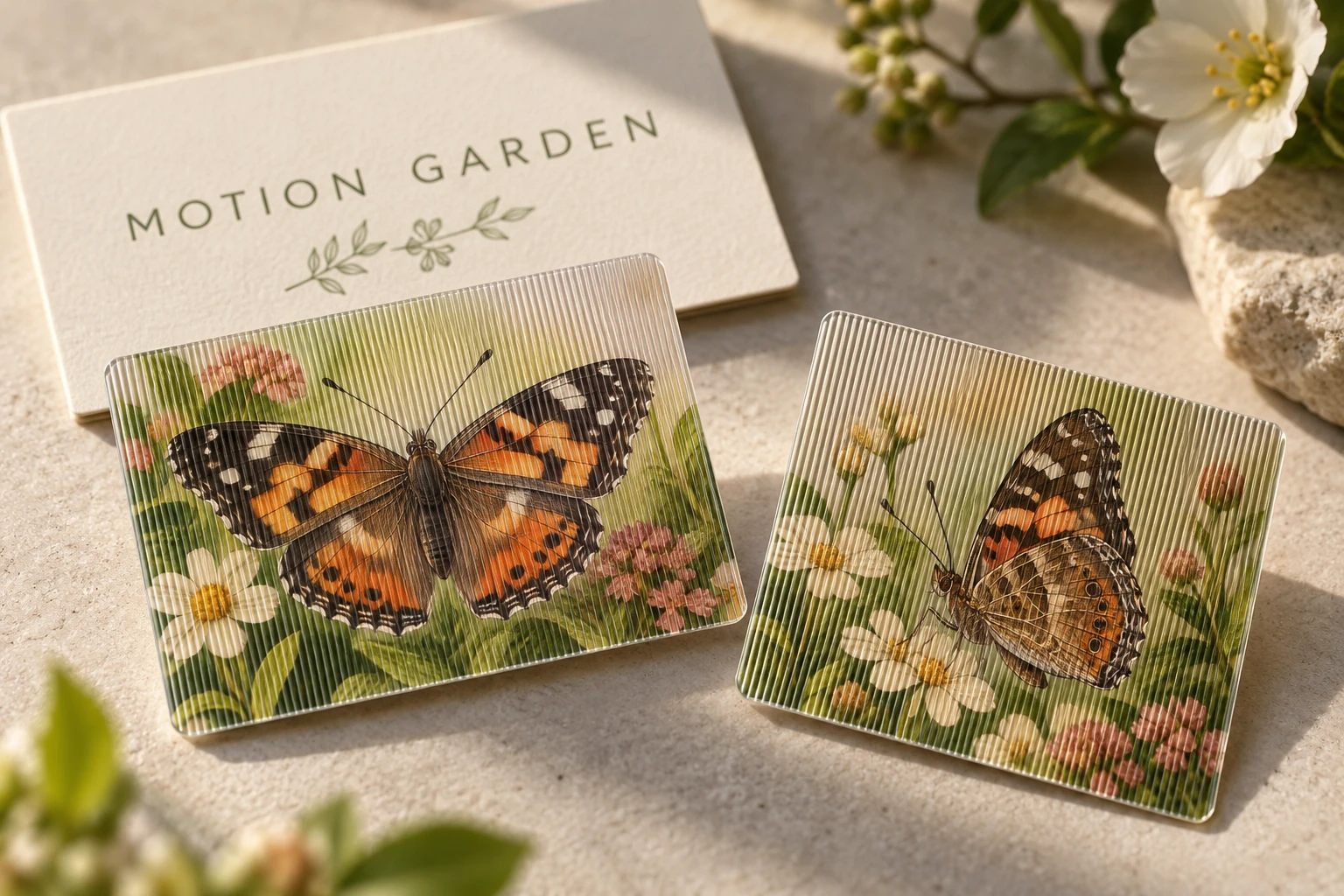
Choose flip, motion or depth deliberately
DPLenticular explains the combination of interlaced images with a lenticular lens, where viewing angle affects the image seen. Its effect overview distinguishes image changes, animation and depth. These are technical starting points for the enquiry, not interchangeable artwork instructions or evidence that a particular supplier offers the project.
For a two-image flip, identify the first and second state and what should happen between them. For motion, agree the sequence with the specialist before adding more frames. For depth, provide the required source or layer arrangement in the format the producer confirms. A normal flat illustration should not be assumed to create depth automatically.
Describe the viewing movement
Show the final item, intended upright orientation and normal viewing distance. Mark whether a user tilts it side to side or up and down. If the graphic must remain aligned with a gift tin or card, include that installed orientation; rotating a loose sample to find its best effect may not represent the actual product.
Ask the specialist to recommend lens and image preparation for those conditions. Do not copy a universal lens pitch, angle or frame count from another project. A larger display and a small hand-held sticker can require different choices even when they use the same butterfly illustration.
| Brief field | What it resolves |
|---|---|
| Effect and image sequence | What change the viewer should perceive |
| Installed orientation | Which way the finished item can actually be viewed or tilted |
| Viewing distance and lighting | The conditions a representative sample should address |
| Finished size and outline | The physical product being quoted and handled |
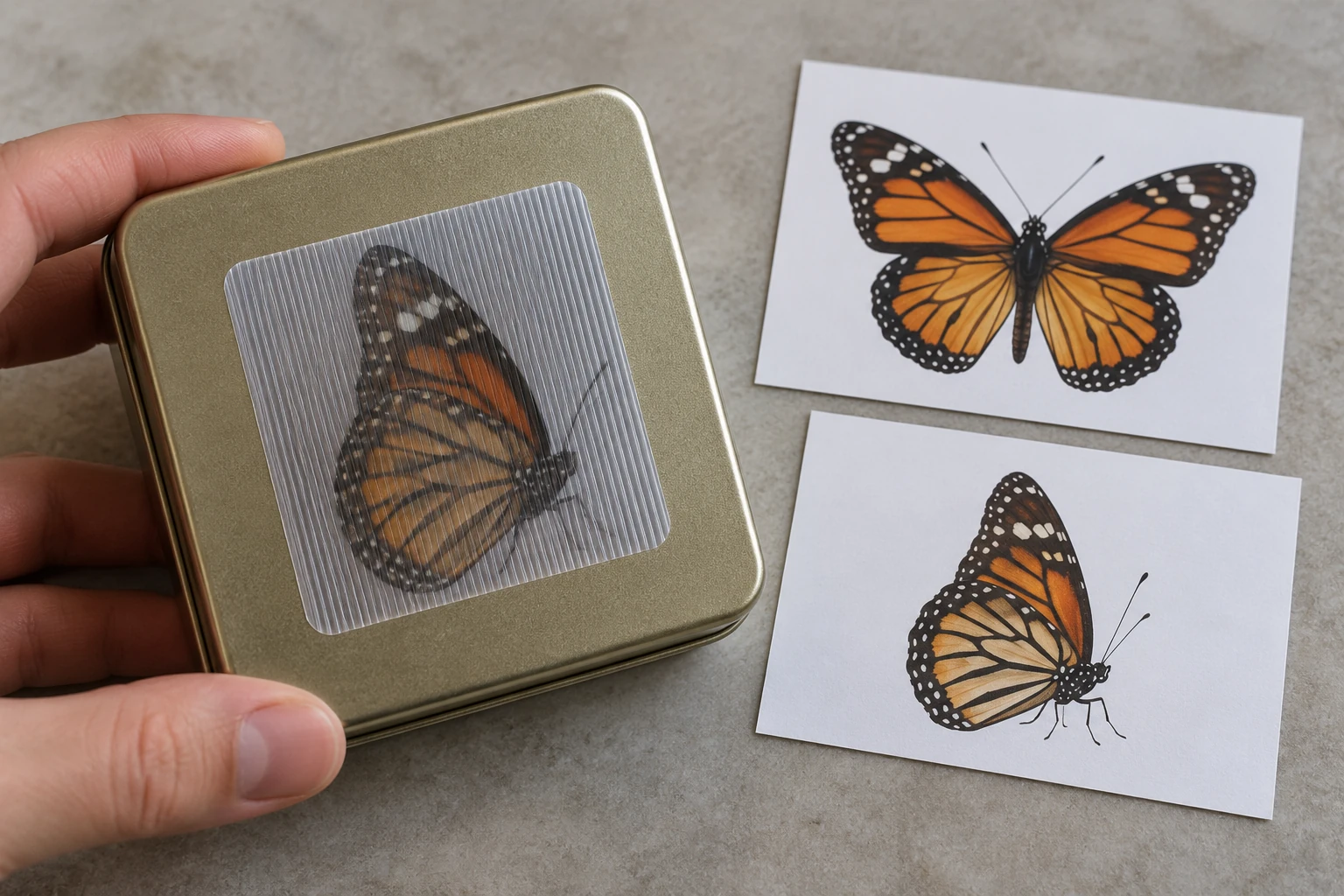
Separate image approval from effect approval
Approve spelling, rights and each source image first. Then request a representative physical effect reference under the proposed process. Examine intended views and the transition at actual size. Record unwanted carryover, unclear details or an effect that requires an impractical viewing position as observations for the producer.
If the effect is difficult to read, compare simplifying the background, increasing contrast between intended states or changing the sequence with the specialist. Do not approve a more complicated animation solely because it contains more frames. Essential product information may need a stable location outside the changing area.
Include the adhesive and finished item
A satisfactory optical effect does not approve attachment. Identify the real contact surface, curvature and relevant use conditions, then ask which adhesive-backed construction is proposed. A sample held flat in a hand cannot show whether the intended rigid item changes its appearance or handling.
Keep the lens, interlaced output, source versions, finished dimensions and accepted viewing conditions together. If size or lens changes, have the producer identify which preparation and proofing steps need repeating. Reusing the same two source images alone does not preserve the approved effect.
For a collectible sticker feasibility enquiry, send the desired effect, source artwork, upright orientation, size, viewing route, application surface and quantities. Ask whether a suitable lenticular route is available or whether a conventional printed sticker format better serves the project. Obtain specialist confirmation and a representative sample before committing to a changing-image product.